The 5 Best Places to Live in Montana: A City Comparison (updated)
- Local Editor:Local Editor: The HOMEiA Team
- Category: City Living Guide
Share


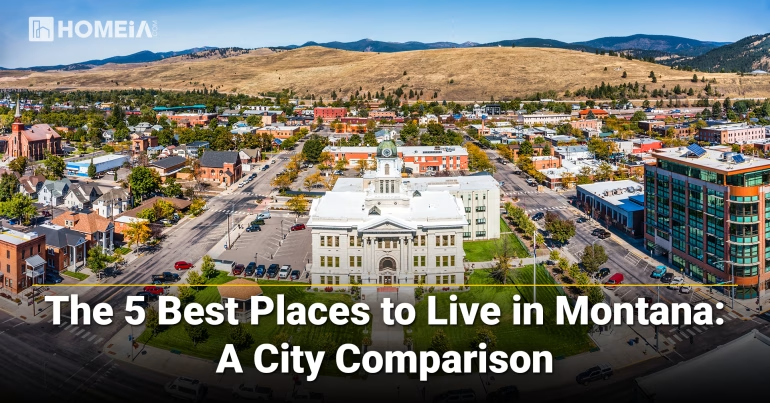
Montana is a state of breathtaking natural beauty, where rugged wilderness meets charming small towns and vibrant urban centers. Choosing the right community within Big Sky Country is crucial to unlocking a lifestyle that fits your ambitions, no matter the goal.
This guide provides an in-depth, data-driven analysis of the five best places to live in Montana in 2025. We’ve extended beyond simple charm to evaluate these population centers on the factors that matter most: economic opportunity, affordability, safety, access to amenities, and unique quality of life. From the college town of Missoula to the outdoor paradise of Bozeman, we break down what makes each city a premier destination for building your future in the Rocky Mountain West.
For those considering other states, you might also explore our comparison of the pros and cons of living in Washington State.
Table of Contents:
Key Takeaways
- Diverse Options for Diverse Needs: These top cities offer distinctly different lifestyles, from the university atmosphere of Missoula to the high-tech hub of Bozeman and the state capital environment of Helena.
- Affordability is a Challenge: Unlike its Western neighbors, recent popularity has driven up housing costs significantly, with most cities above the national average for cost of living.
- Outdoor Access is Universal: All five cities provide exceptional access to outdoor recreation, from world-class skiing to fishing, hiking, and mountain biking.
- Economic Drivers Differ: Each list member’s job market is anchored by different sectors—education, tech, government, healthcare, or tourism—requiring alignment with your career field.
- Community Culture Varies: The intangible sense of place, community engagement, and local culture are often the defining factors in choosing between these exceptional locations.
I. Methodology: How We Chose the Best
To ensure a comprehensive and objective ranking, our analysis is based on a multi-factor methodology that evaluates each city on key criteria essential for quality of life in the Montana context.
Our evaluation criteria are weighted as follows:
- Employment & Economy (25%): Assesses job market health, major employers, economic diversity, and income levels relative to the local cost of living.
- Housing & Affordability (25%): Evaluates median home value, average rent, and home-price-to-income ratios, acknowledging Montana’s challenging housing market.
- Quality of Life & Culture (20%): Encompasses access to unique outdoor recreation, cultural attractions, dining, entertainment, and overall lifestyle.
- Access & Infrastructure (15%): Considers connectivity (road, air), healthcare access, internet reliability, and other critical services.
- Safety & Community (15%): Reviews crime statistics and overall community engagement, resilience, and family-friendliness.
Data is compiled from reputable 2025 sources, including the U.S. Census Bureau, Bureau of Labor Statistics, FBI crime data, and real estate market analyses (Zillow, local MLS).

Related article
Our Methodologies to create HOMEiA Score Ratings for Each Group of Content
HOMEiA uses a consistent, data-driven methodology to evaluate U.S. states for livability, affordability, and long-term value. Our analysis centers on key factors such as Housing and Affordability, Cost of Daily Living, Access and Infrastructure, Community Strength, Safety and Quality of Life, Economic Resilience and Job Market…
II. The 5 Best Cities: A Portrait of Montana’s Diversity
1. Great Falls: The Affordable Alternative
HOMEiA Score: 79/100
- Cost of Living: 2% below U.S. average
- Monthly Rent: $950
- Home price to income ratio: 5.1:1
- Income to rent ratio: 52.6x
- Safety rating: 72/100
A. Employment & Economy: Great Falls’ economy is anchored by Malmstrom Air Force Base, healthcare, and agriculture. The base provides stable government employment, while Benefis Health System serves as the region’s major healthcare provider. Location along the Missouri River supports agricultural and industrial activities, providing economic diversity.
B. Housing & Affordability: The Falls offers Montana’s most affordable housing market with a home-price-to-income ratio of 5.1:1. The cost of living below the national average makes it attractive for families and retirees. Housing options include historic homes and newer developments at prices accessible to middle-income earners.
C. Quality of Life & Culture: GF provides access to outdoor recreation along the Missouri River and proximity to the Rocky Mountain Front. Here features the C.M. Russell Museum, Gibson Park, and the Lewis and Clark Interpretive Center. While less trendy than western Montana cities, it offers solid community amenities and family-friendly activities.
D. Access & Infrastructure: Great Falls International Airport (GTF) provides regional air service, while the city’s infrastructure supports its military and agricultural economy. Healthcare facilities are comprehensive, while serving as a regional hub for north-central Montana. Internet connectivity has improved due to the population boom.
E. Safety & Community: With a safety rating of 72/100, there exists respectable safety levels and a developed community. The population includes military families, agricultural workers, and long-time residents in a conservative, family-oriented environment. Community organizations and events foster strong local connections.
Related article
The Pros and Cons of Living in Montana
Montana is more than its majestic mountains and wild beauty—it’s a state where adventure and community thrive. However, challenges like long winters, job scarcity, and isolation exist. This guide explores Montana’s pros and cons, plus its best cities for professionals, families, and retirees seeking life in Big Sky Country.
2. Billings: The Economic Hub
HOMEiA Score: 82/100
- Cost of Living: 5% above U.S. average
- Monthly Rent: $1,350
- Home price to income ratio: 6.2:1
- Income to rent ratio: 45.2x
- Safety rating: 65/100
A. Employment & Economy: Billings serves as Montana’s economic engine and largest city. As the regional hub for energy, healthcare, and finance, it offers the state’s most diverse job market. Major employers include Billings Clinic (healthcare), St. Vincent Healthcare, and numerous energy companies. Its strategic location along major transportation routes makes it a commercial and distribution center for the entire region.
B. Housing & Affordability: Here lies relatively more affordable housing compared to other in-state cities, though prices have risen significantly. The home-price-to-income ratio of 6.2:1 reflects the challenge of Montana’s housing market. The city provides a mix of historic neighborhoods and newer developments, with options ranging from downtown apartments to suburban homes.
C. Quality of Life & Culture: There exists a blend of urban amenities and outdoor access. Residents enjoy proximity to the Rimrocks, Riverfront Park, and Yellowstone River. Boasting a growing arts scene, Montana’s largest mall, and numerous dining options. While less focused on tourism than other cities, it offers solid cultural institutions and community events.
D. Access & Infrastructure: As the state’s largest city, there exists comprehensive infrastructure including an international airport (BIL), major healthcare facilities, and all essential services. The city serves as the commercial hub for eastern Montana and northern Wyoming, with excellent connectivity via I-90 and I-94.
E. Safety & Community: With a safety rating of 65/100, it maintains moderate safety levels typical of a regional urban center. The community is practical and business-focused, with strong neighborhood associations and a growing sense of civic pride. The population includes long-time residents, energy workers, and healthcare professionals.
Recommended for you




3. Helena: The State Capital
HOMEiA Score: 83/100
- Cost of Living: 8% above U.S. average
- Monthly Rent: $1,200
- Home price to income ratio: 6.5:1
- Income to rent ratio: 50.0x
- Safety rating: 75/100
A. Employment & Economy: Helena’s economy is dominated by state government employment, providing stability and noteworthy benefits. Carroll College and St. Peter’s Health contributes to the education and healthcare sectors. It has experienced growth in professional services and tech, though the job market remains government-focused.
B. Housing & Affordability: Their housing market reflects its capital city status with a home-price-to-income ratio of 6.5:1. Prices have increased with demand from government workers and retirees attracted by the city’s amenities and location. Its market offers historic homes in established neighborhoods and newer developments in growing areas.
C. Quality of Life & Culture: Overall, it offers exceptional outdoor access with immediate proximity to the Helena National Forest and numerous trail systems. The city features the Montana State Capitol, historic downtown, and numerous cultural events. Their community maintains a balance between government professionalism and outdoor recreation lifestyle.
D. Access & Infrastructure: Helena Regional Airport (HLN) provides essential air service, while infrastructure supports its capital functions. Healthcare facilities are revered, and government investment ensures up-to-par public services. Location between mountain ranges can create transportation challenges in winter.
E. Safety & Community: With a safety rating of 75/100, commendable levels and tight community fabric are found in the capital. This population is composed of government professionals, educators, healthcare workers, and outdoor enthusiasts in a stable, engaged community. Neighborhood associations and civic organizations are active and effective.

Related article
Moving to Montana: The Complete Relocation Guide & Checklist
Bordered by Canada and five U.S. states, Montana offers vast wilderness, outdoor adventure, and a strong sense of community. Home to over a million residents, it combines scenic beauty with affordability, no sales tax, and independent spirit. This guide provides key insights for relocating to the breathtaking Treasure State.
4. Missoula: The University Town
HOMEiA Score: 84/100
- Cost of Living: 15% above U.S. average
- Monthly Rent: $1,450
- Home price to income ratio: 7.8:1
- Income to rent ratio: 41.4x
- Safety rating: 68/100
A. Employment & Economy: Missoula’s economy centers around the University of Montana, healthcare, and a growing tech sector. The university provides consistent employment in education and research, while the healthcare sector includes Providence St. Patrick Hospital and Community Medical Center. It’s transformed into a haven for remote workers and tech startups, creating a dynamic but competitive job market.
B. Housing & Affordability: Locals face significant housing challenges with a home-price-to-income ratio of 7.8:1. High demand from students, faculty, and outdoor enthusiasts has driven prices well above state averages. Renting is particularly competitive, with limited inventory and rising costs that challenge many residents.
C. Quality of Life & Culture: Here offers an exceptional quality of life centered around outdoor recreation and cultural amenities. The city provides immediate access to hiking, fishing, and skiing, along with a vibrant downtown featuring local breweries, restaurants, and the historic Wilma Theatre. The university brings cultural events, Division I athletics, and intellectual energy.
D. Access & Infrastructure: Missoula International Airport (MSO) provides regional connectivity, while the city’s infrastructure supports its ever-growing population. Healthcare facilities are top-notch, and the university contributes to robust educational and cultural resources. Traffic congestion has increased with population growth.
E. Safety & Community: With a safety rating of 68/100, it maintains an acceptable level of safety for a college town.. Residents are highly educated, environmentally conscious, and engaged in local issues. The population blends students, academics, outdoor enthusiasts, and long-time residents in a progressive, active community.
Related article
7 Most Affordable Places to Live in Montana
Montana combines stunning scenery with surprising affordability, featuring low housing costs and no state sales tax. This guide highlights seven of the most budget-friendly Montana communities for 2025, analyzing housing, utilities, and transportation to help you find financial stability without losing Big Sky Country’s authentic outdoor charm.
5. Bozeman: The Outdoor Tech Hub
HOMEiA Score: 87/100
- Cost of Living: 25% above U.S. average
- Monthly Rent: $1,800
- Home price to income ratio: 9.2:1
- Income to rent ratio: 55.6x
- Safety rating: 80/100
A. Employment & Economy: Bozeman has transformed into Montana’s tech and innovation hub, thanks to Montana State University. Playing host to numerous tech companies, research facilities, and startups creates high-paying jobs in engineering, software development, and biotech. Tourism and outdoor recreation industries also contribute significantly to economic prosperity.
B. Housing & Affordability: This city faces the state’s most severe housing affordability crisis with a home-price-to-income ratio of 9.2:1. Extreme demand from high-income professionals, second-home buyers, and outdoor enthusiasts has created one of the West’s most competitive housing markets. Rental costs are among the highest in the state.
C. Quality of Life & Culture: Locals are spoiled by world-class outdoor recreation with immediate access to Bridger Bowl, Big Sky Resort, and numerous hiking trails. They also enjoy a vibrant downtown with excellent dining, breweries, and cultural events. Montana State University provides Division I athletics, research opportunities, and intellectual energy.
D. Access & Infrastructure: Bozeman Yellowstone International Airport (BZN) is MT’s busiest airport, providing necessary connectivity. Infrastructure has struggled to keep pace with rapid growth, leading to traffic congestion and strain on public services. Healthcare and educational facilities are top-tier.
E. Safety & Community: With a safety rating of 80/100, it holds sought-after safety levels despite rapid growth. Community members are highly educated, entrepreneurial, and outdoor-focused, blending academics, tech professionals, and long-time residents. Developed neighborhood associations and civic engagement help maintain community cohesion.
Comparative Data Table
City | HOMEiA Score | Cost of Living | Avg. Rent (2-Bed) | Home Price to Income Ratio | Income to Rent Ratio | Safety Rating |
|---|---|---|---|---|---|---|
| Great Falls | 79 | -2% | $950 | 5.1:1 | 52.6x | 72 |
| Billings | 82 | +5% | $1,350 | 6.2:1 | 45.2x | 65 |
| Helena | 83 | +8% | $1,200 | 6.5:1 | 50.0x | 75 |
| Missoula | 84 | +15% | $1,450 | 7.8:1 | 41.4x | 68 |
| Bozeman | 87 | +25% | $1,800 | 9.2:1 | 55.6x | 80 |
Conclusion: Finding Your Perfect Montana Match
The best Montana city depends entirely on your priorities and circumstances. Bozeman delivers world-class outdoor access and high-tech careers at premium prices, while Missoula offers university culture and progressive values. Helena provides government stability and excellent amenities, Billings offers economic diversity and regional connectivity, and Great Falls presents affordability and family-friendly living.
Each location represents a distinct trade-off between cost, opportunity, and lifestyle. Your ideal choice should align with career goals, budget constraints, and personal preferences for mountain living. For those still considering options, our guide to the best places to live in Colorado might provide additional insights for mountain-state living.
Recommended for you



FAQs About Living in Montana’s Best Cities
1. Which city has the best job market for tech professionals? Bozeman has emerged as Montana’s tech hub with numerous tech companies, research facilities, and startups. Missoula also has a growing scene, particularly for remote workers and smaller startups.
2. I’m on a budget. Where should I consider? Great Falls offers Montana’s most affordable housing and cost of living below the national average. Billings provides better economic opportunities while maintaining relative affordability compared to western Montana cities.
3. Which city is best for outdoor recreation? All five cities offer exceptional outdoor access, but Bozeman provides immediate proximity to world-class skiing, fishing, and hiking. Missoula offers exceptional river recreation and trail systems, while Helena provides extensive national forest access.
4. What’s the best city for families with school-age children? Helena offers excellent schools and very good safety (75/100), along with family-friendly amenities. Bozeman has top-rated schools but comes with high housing costs. Great Falls provides affordability and good schools in a family-oriented community.
5. I’m a remote worker. Where should I move? Bozeman and Missoula are popular choices for remote workers due to their amenities and lifestyle, though housing costs are high. Helena offers reliable infrastructure and lower costs than Bozeman. Always confirm internet reliability at your specific address, as rural areas can have connectivity challenges.
For those exploring other mountain states, you might find our guide to the pros and cons of living in Colorado helpful, or consider the best places to live in Wyoming for alternative Rocky Mountain options. If you’re interested in comparing costs, our analysis of the cost of living in California vs Texas provides a broader regional context. For those prioritizing safety, the safest places to live in Florida offers different climate considerations.
Related article
The 5 Best Places to Live in Montana: A City Comparison (updated)
Montana blends rugged wilderness with welcoming communities, offering endless opportunities for outdoor living and growth. This guide spotlights the five best Montana cities to live in 2025, based on affordability, opportunity, safety, and quality of life—from vibrant Missoula to scenic Bozeman—helping you find your perfect Rocky Mountain home.


Related Content