8 Key Steps to Buy a Manufactured Home (updated)
- Local Editor:Local Editor: The HOMEiA Team
- Category: Buy House
Share


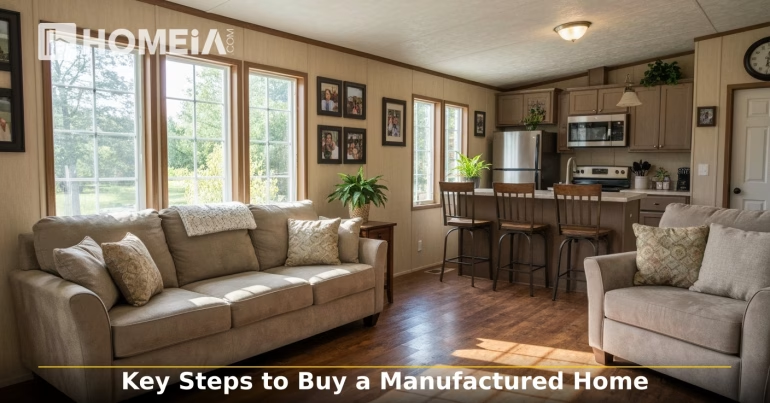
The American housing landscape has undergone a seismic shift. As traditional site-built home prices remain out of reach for many, manufactured housing has stepped into the spotlight—not as a “last resort,” but as a high-tech, sustainable, and architecturally stunning alternative. This year, a manufactured home is a precision-engineered product built to federal standards exceeding local building codes.
Table of Contents:
- Key Takeaways for Modern Buyers
- Step 1: Defining Your Vision in the “Multi-Unit” Era
- Step 2: Selecting the Right Retailer and Manufacturer
- Step 3: Land vs. Community – The Strategic Choice
- Step 4: Navigating Recent Financing Changes
- Step 5: Customization and the “Flex-Space” Movement
- Step 6: Site Preparation – The Foundation of Longevity
- Step 7: The Logistics of Delivery and “Button-Up”
- Step 8: Post-Installation and Warranty Protection
- Comprehensive Manufactured Home FAQs
Key Takeaways for Modern Buyers
The current manufactured housing market is defined by flexibility and efficiency. Thanks to recent HUD updates, buyers can now finance multi-unit designs (up to four units), making these homes viable for investment or multi-generational living. Financing has become more accessible, with the government recently raising loan limits and expanding support for used units. Energy efficiency is no longer optional; mandatory “Zero Energy Ready” standards drastically lower long-term ownership costs. To succeed, prioritize “Real Property” titling for maximum appreciation, budget at least $15,000 for site preparation, and ensure retailers are compliant with the most recent federal safety standards.

Related article
10 Key Things to Know Before Buying a Manufactured Home
Manufactured homes can cost anywhere from $20,000 for a basic single-section home to upwards of $200,000 for a multi-section home with all the upgrades. The average cost is about $82,000. Here’re 10 important things you should know before you buy a manufactured home…
Step 1: Defining Your Vision in the “Multi-Unit” Era
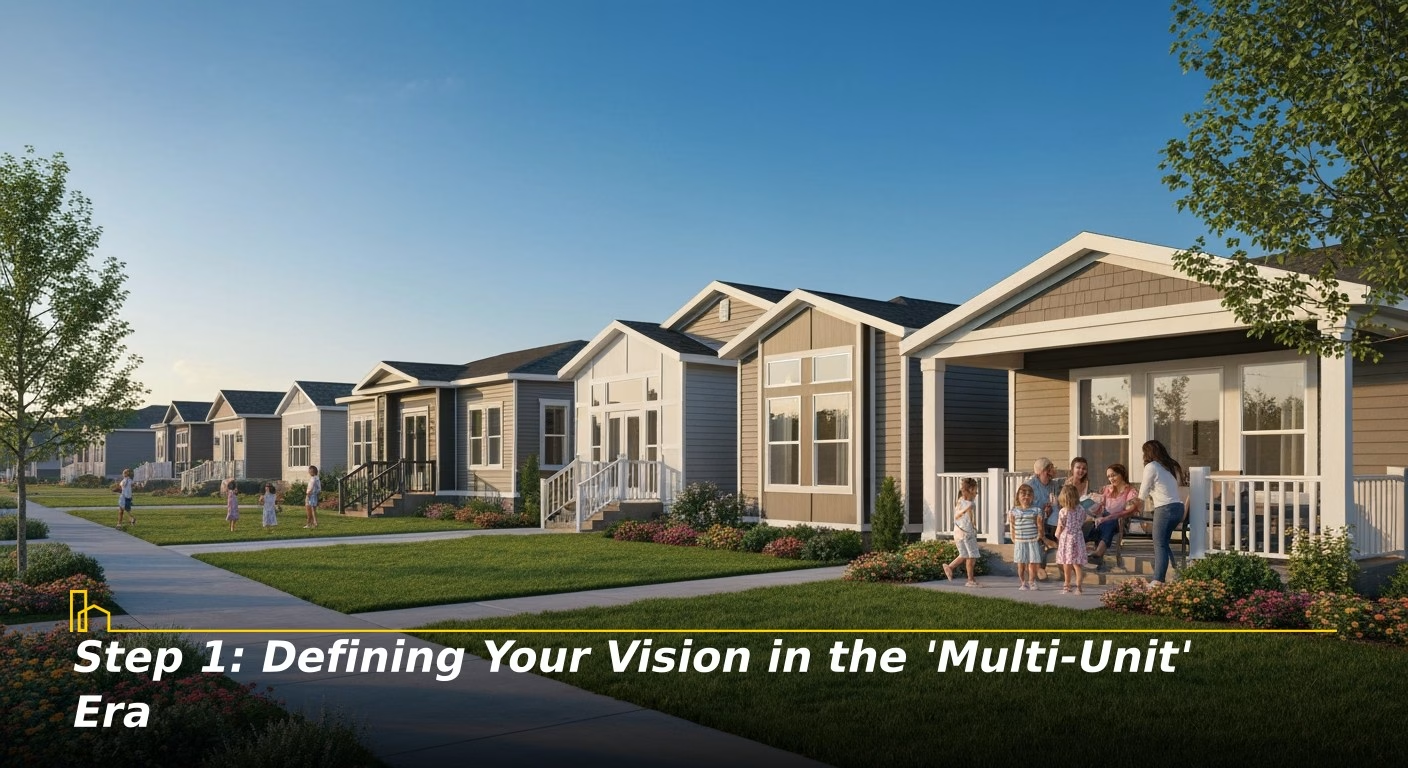
In previous decades, your choices were limited to a single-wide or a double-wide. Recently, options have expanded exponentially.
A. The Rise of Multi-Unit Manufactured Housing
The most significant update to the HUD Code in decades took full effect this year, marking a new era for factory-built housing. For the first time, factories can produce duplexes, triplexes, and even four-plexes under the same federal oversight as single-family homes. This change addresses the “missing middle” in American housing.
This is a game-changer for:
- Real Estate Investors: High-yield rental properties built at a fraction of the cost—and twice the speed—of traditional construction.
- Multi-Generational Families: Giving aging parents or adult children their own attached but private living unit with independent utility metering.
- Urban Infill: Using manufactured housing for increasing density in zones that previously only allowed for site-built multi-family units.
B. Budgeting Beyond the “Sticker Price”
A common mistake is budgeting only for the home itself. Complete project costs include:
- The Home: $80,000 – $250,000+ depending on size and luxury tier.
- Land Acquisition: $20,000 – $150,000+ (highly regional).
- Site Improvements: $15,000 – $45,000. This covers clearing, grading, septic, and foundation work.
- The “Last Mile” Costs: Permitting fees, impact fees, and temporary utility hookups during construction.
Related article
8 Key Steps to Buy a Manufactured Home in California
If you’re among the growing number of people looking to buy a mobile home in California, there are a few steps to take: Talk to owners of mobile homes, consider your priorities, learn about local laws and regulations, locate dealerships and sellers, explore available manufacturers, and consider local conditions. Then you can finance and insure your home and sign a contract…
Step 2: Selecting the Right Retailer and Manufacturer
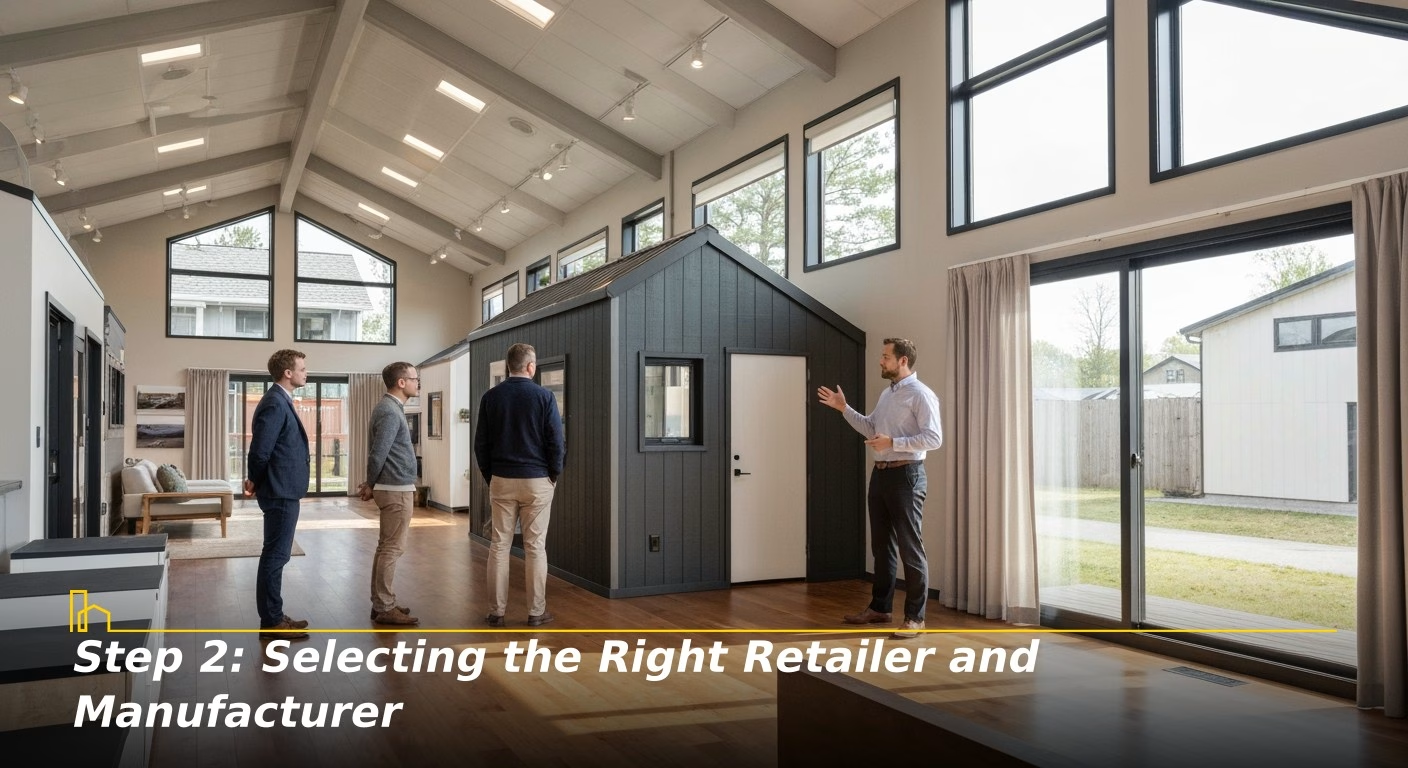
Not all manufacturers are created equal. In the current market, there’s division between “Value-Focused” builders and “Luxury-Custom” builders.
A. Evaluating Recent Factory Standards
The newest HUD Code updates introduced strict standards. When touring a retailer’s lot, look for these specific advancements:
- The “Peak-Flip” Roof: Recent HUD-approved designs allows for steeper roof pitches (resembling traditional homes) that can be easily “flipped” up during installation. Doing so eliminates “flat roof” looks often associated with factory housing.
- Smart Home Integration: Modern units come pre-wired for high-speed fiber optics, smart thermostats, and integrated security systems.
- Sustainability Ratings: Ask if the manufacturer meets the DOE Zero Energy Ready Home (ZERH) standards. These homes are so self-sustainable that a small solar array can often offset the entire annual energy consumption.
Step 3: Land vs. Community – The Strategic Choice
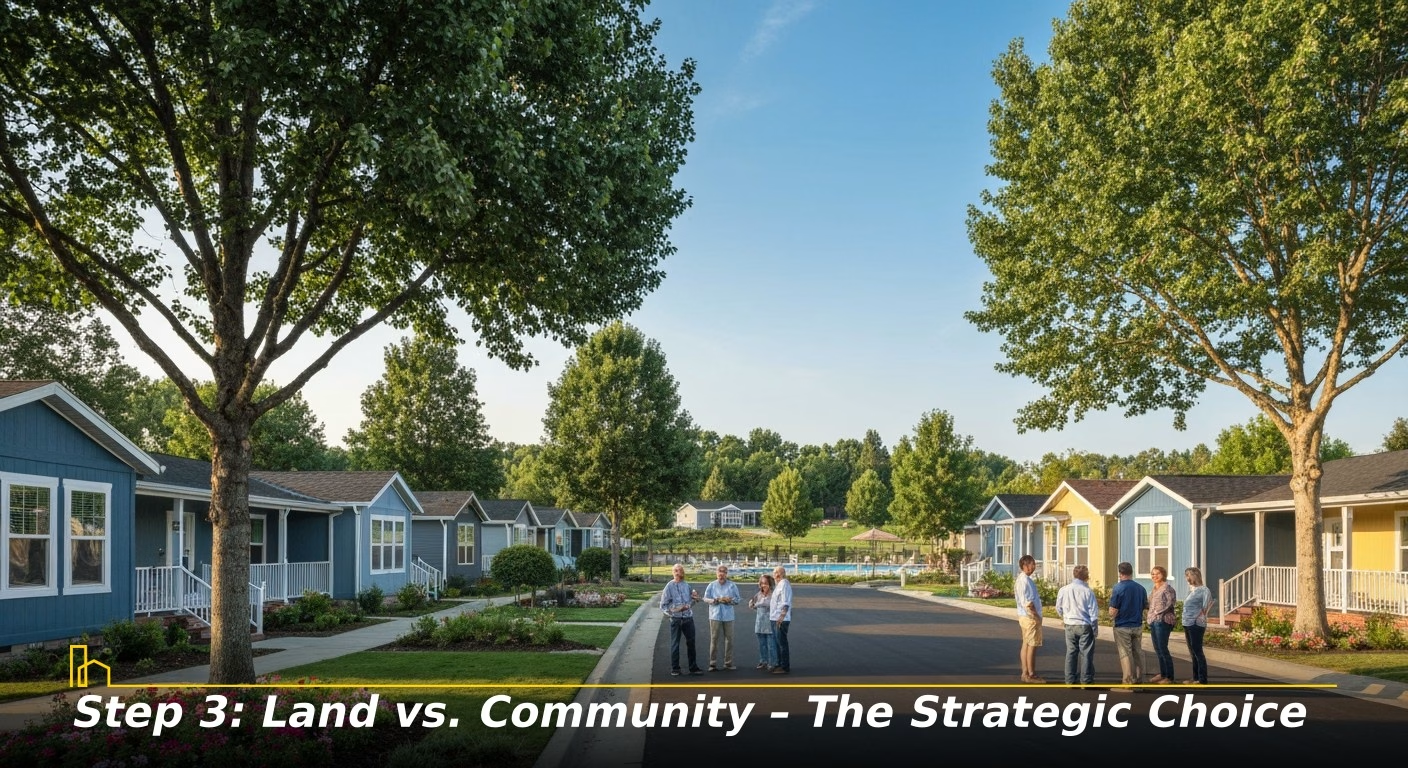
Selection of location impacts lifestyle, financing options, and resale value.
A. Private Land Ownership
If the home is placed on land you own, there’s the ability to title it as Real Property. Doing so is the gold standard for appreciation. In recent years, many counties have streamlined the “conversion” process, making it easier to turn a factory-built unit into a permanent real estate asset.
B. Land-Lease Communities (The Modern “Park”)
Current market trends include the rise of “Lifestyle Communities.” These aren’t the typical trailer parks; they are gated communities with pickleball courts, high-end clubhouses, and professional management.
- The Modern Tip: Look for Resident-Owned Communities (ROCs). They’re co-ops where residents collectively own the land, protecting you from corporate rent hikes and providing a sense of shared governance.
Recommended for you




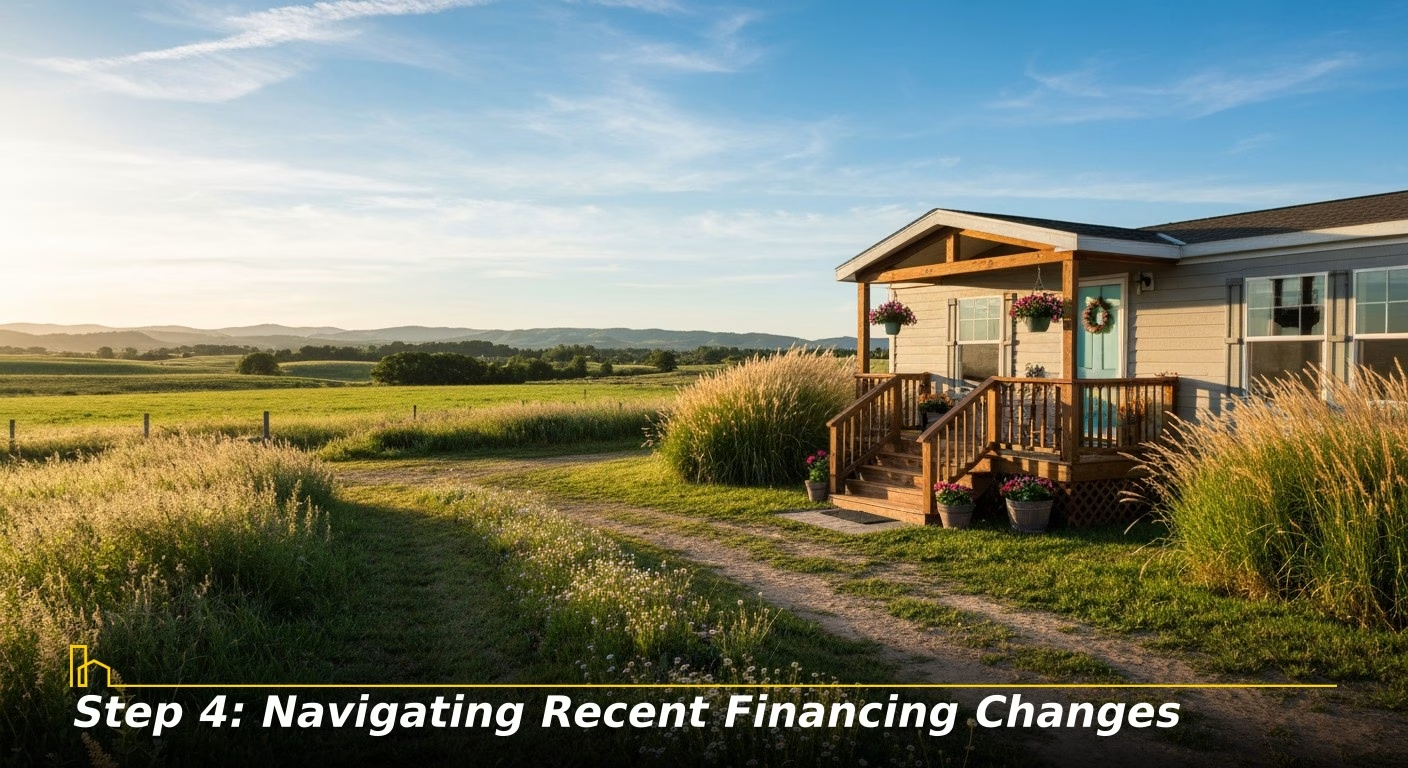
Financing a manufactured home is more complex than a standard mortgage because it bridges the gap between personal property (like a car) and real property (like a house).
A. Current HUD Loan Limits
The government recently significantly increased loan limits for FHA-insured manufactured home loans to keep pace with inflation. These limits adjust annually to align with the House Price Index (HPI), ensuring buyers aren’t priced out of the market.
Current Manufactured Home Financing Comparison Table
Feature | FHA (Title II) | VA Loan | Conventional (MH Advantage) | USDA (Pilot/Rural) | Chattel Loan |
|---|---|---|---|---|---|
| Best For | Lower credit/modest savings | Veterans & active military | High credit & long-term equity | Rural buyers (low/mod income) | Homes on leased land (parks) |
| Min. Down Payment | 3.5% | 0% | 3% | 0% | 5% – 10% |
| Est. Interest Rate | 6.25% – 7.25% | 6.0% – 6.75% | 6.1% – 6.8% | 6.0% – 7.0% | 8.5% – 11.0%+ |
| Min. Credit Score | 580 | Typically 620 | 660 – 700+ | 640 | 575 – 600 |
| Property Type | Real Property (Land + Home) | Real Property (Land + Home) | Real Property (Land + Home) | Real Property (Land + Home) | Personal Property (Home Only) |
| Foundation | Permanent (HUD Code) | Permanent (HUD Code) | Permanent (HUD Code) | Permanent (HUD Code) | Pier & Beam (usually) |
| Max Loan Term | 30 Years | 30 Years | 30 Years | 33 – 38 Years | 15 – 25 Years |
B. Chattel Loans vs. Traditional Mortgages
As shown in the table above, the “Type” of property determines interest rate.
- Chattel Loans: Used when the home is on leased land. They are personal property loans. Expect interest rates to be several percentage points higher than traditional mortgages.
- Conventional Mortgages: Programs including MH Advantage offer 3% down payments and 30-year fixed rates.
- USDA Loans: Recently, the USDA pilot program was expanded to allow for the purchase of existing (used) manufactured homes in many states, offering 0% down payment path for rural buyers.
Step 5: Customization and the “Flex-Space” Movement
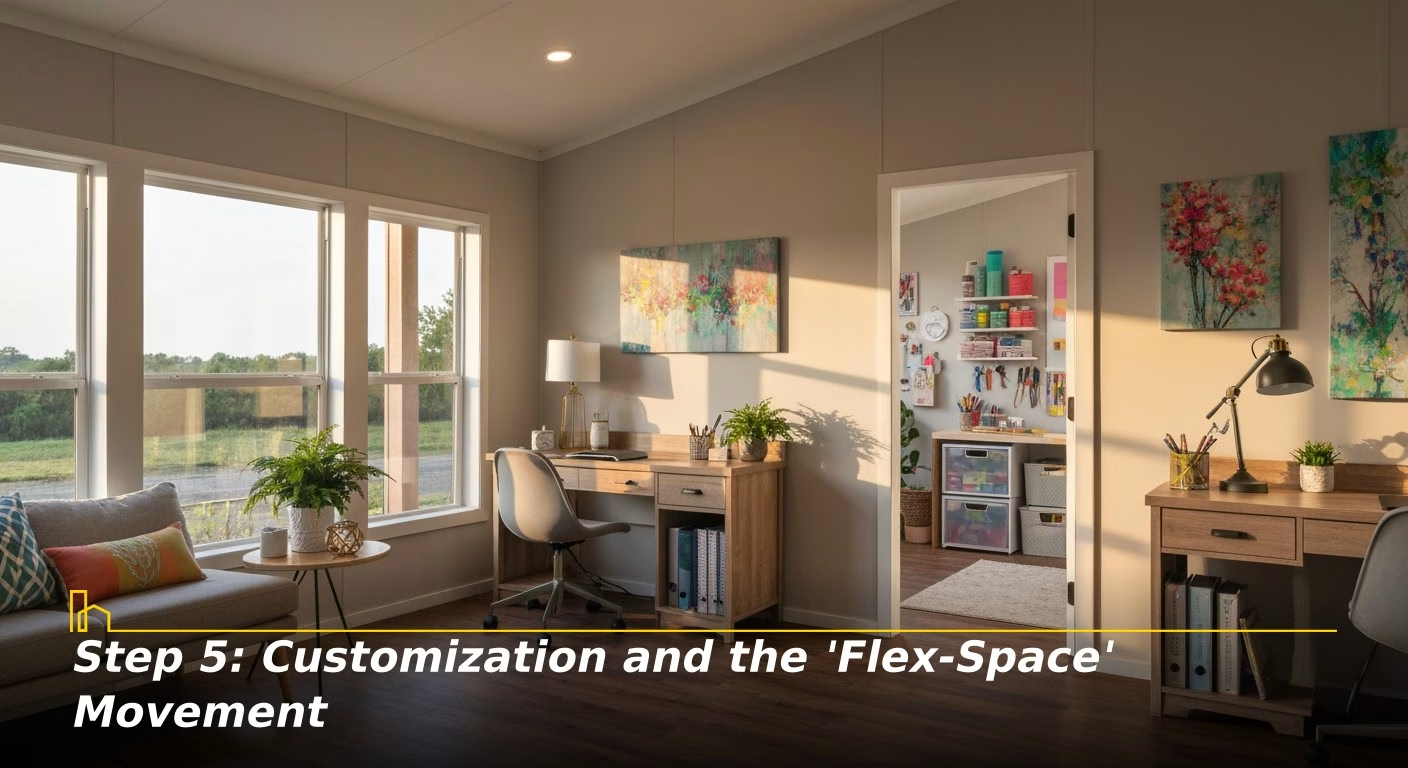
Buyers value versatility. Manufacturers have responded by moving away from “take it or leave it” floor plans.
A. The Flex-Room Concept
With hybrid work now a permanent fixture, current models often feature a “Flex-Space.” This is a room designed with reinforced soundproofing and extra data ports. It can serve as an executive home office, sound-isolated media room, or ADA-compliant suite for guests.
Related article
9 Common Types of Manufactured Home Communities
We’ll explore the various types of manufactured home community and their Pros and Cons. If you are in search of a place to put your manufactured home, you’ll find many ideas here…
Step 6: Site Preparation – The Foundation of Longevity
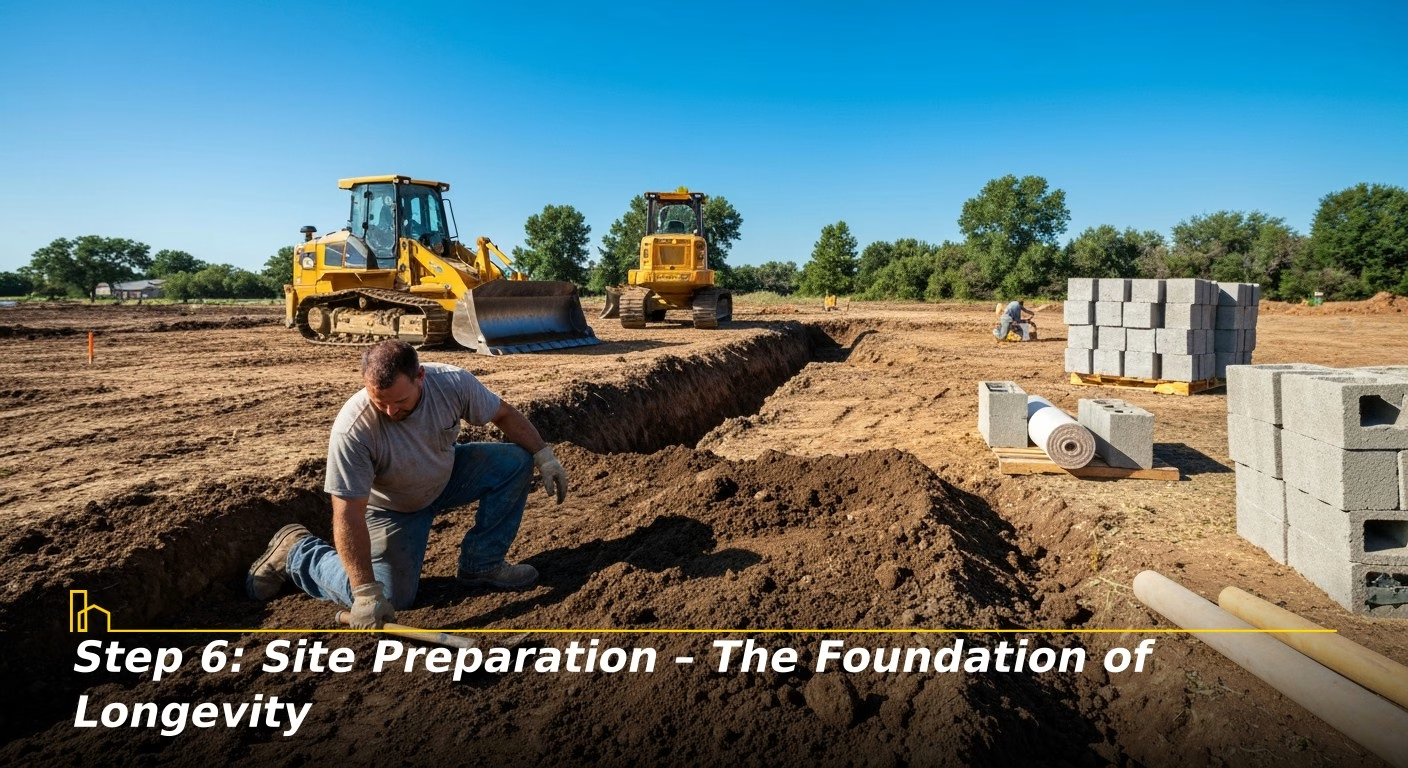
This is where many buyers experience “sticker shock.” Site prep is the most labor-intensive and variable part of the process.
A. Engineering the Site
In recent years, local building departments have become stricter regarding drainage and soil stability. The below are required:
- Soil Compaction Test: To ensure the ground won’t shift or settle unevenly under the weight of the home.
- Septic/Sewer Installation: If not on city water, a septic system installation currently costs between $10,000 and $25,000.
- Foundation Selection:
- Slab-on-Grade: Solid concrete pad providing reliable stability.
- Crawlspace: Offers premium access to plumbing and improves home quality for the best conventional financing rates.
- Basement: Modern manufactured homes can be placed over a full basement, providing storm safety and doubling your square footage.
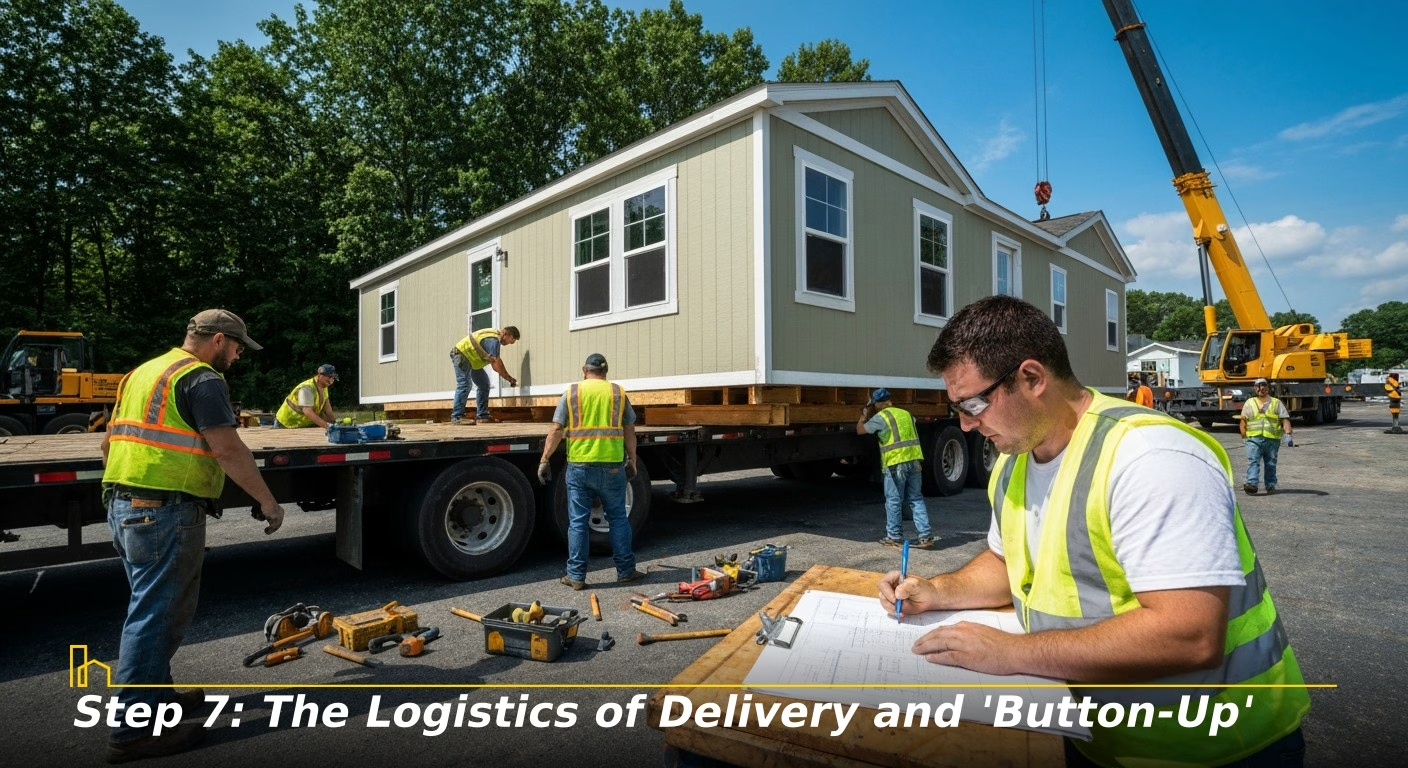
The day your home arrives is exciting, but it is also the most critical day for quality control.
A. The Transportation Phase
Homes are built in a climate-controlled factory, but it must survive a highway trip at 60 mph. Currently, top-tier manufacturers use advanced GPS and vibration sensors for monitoring transport and delivery.
B. The “Button-Up” Process
Once the sections are placed on the foundation via crane or specialized rollers, professionals perform the button-up:
- Sealing the Marriage Line: This is the point where the sections meet. It must be perfectly sealed with specialized gaskets and flashing to prevent air and water leaks.
- Utility Crossover: Connecting the plumbing, HVAC ductwork, and electrical lines between the units.
Related article
10 Top Features for Your New Home
To get you started, we’ve compiled some of the features that deserve your time, attention and money as you plan your build. If you get these features right, your home will be the envy of the new development…
Step 8: Post-Installation and Warranty Protection
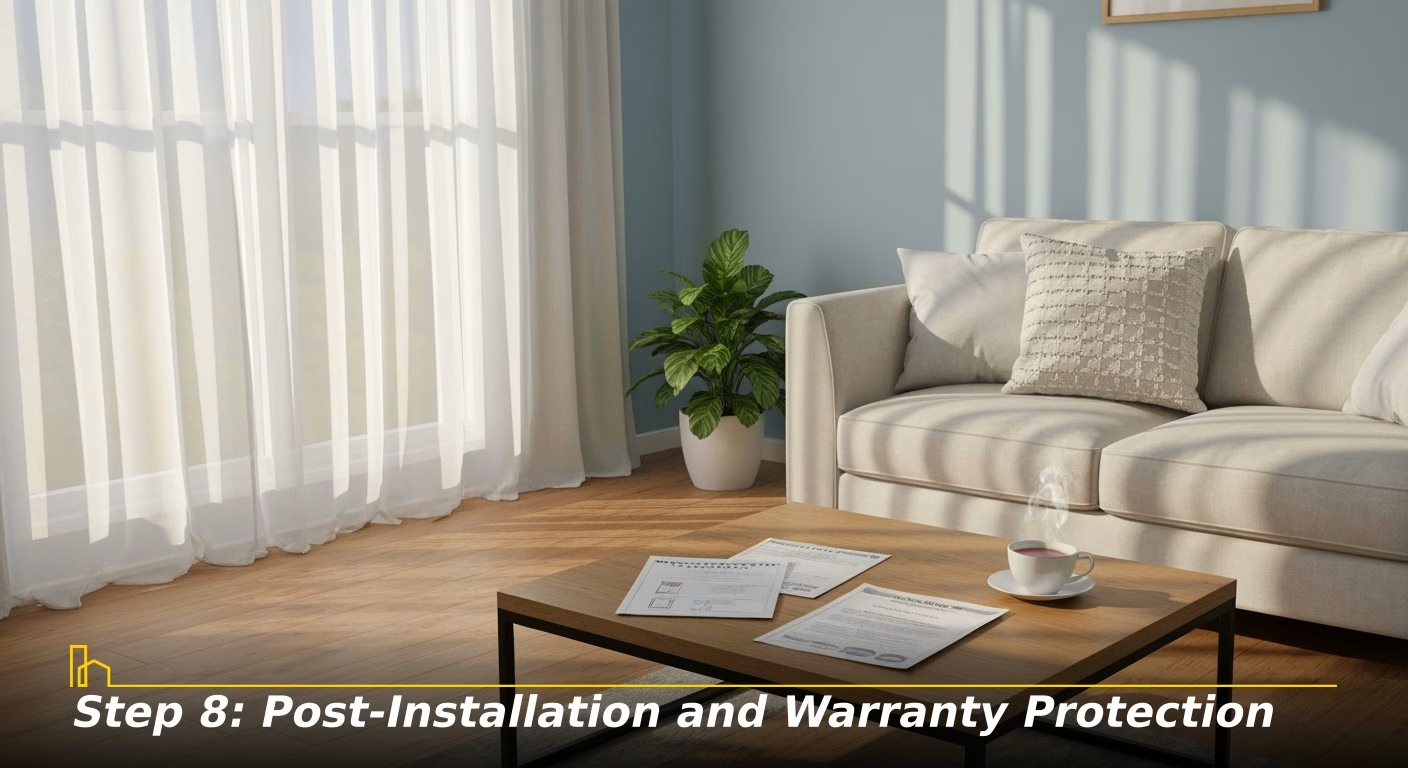
The final step isn’t moving in—it’s ensuring the home is built to the promised standard and protected for the future.
A. The Modern Inspection Checklist
Before you sign the final release of funds to the retailer:
- Check the Marriage Line: Look for any gaps in the trim, ceiling, or flooring.
- Test Every Window and Door: Ensure these open and lock smoothly. If they stick, the home may not be perfectly level.
- The “Data Plate” Verification: Every home has a data plate listing the wind zone, snow load, and roof load. Confirm it matches your specific geographic location.
Conclusion: The Smart Path to Homeownership
Buying a manufactured home is a strategic financial move requiring a blend of real estate savvy and technical knowledge. By taking advantage of recent HUD multi-unit codes, modernized financing limits, and energy-efficient factory technologies, you are buying into a sustainable and affordable lifestyle.
Recommended for you




Comprehensive Manufactured Home FAQs
1. Can I use a manufactured home as a multi-family rental property?
Yes. New federal updates allow for structures with up to four units (duplexes, triplexes, and quadplexes) to be built in a factory and financed under the same federal oversight as single-family homes. This is a major breakthrough for affordable housing and small-scale real estate investing.
2. What is a “Chattel Loan”?
Chattel loans are personal property loans for the home only, typically used when you are leasing a lot in a community. Despite carrying interest rates 2%–4% higher than traditional mortgages, they feature faster approval times and can be done without surveying or appraising land.
3. Are modern manufactured homes truly energy efficient?
Yes. Homes built in 2025must meet rigorous new energy standards. Many now offer “Zero Energy Ready” packages, featuring triple-pane windows, high-density insulation, and “smart” HVAC systems that can lower utility bills by as much as 50% compared to site-built homes from a decade ago.
4. Can I buy a manufactured home online?
While it’s seamless to browse and customize floor plans on the web, you must ultimately work with a licensed retailer. The “last mile” of delivery, precision installation, and local permitting are too complex for a standard e-commerce transaction and require professional coordination.
5. What is the “1976 Rule”?
Lenders will generally not finance any home built before June 15, 1976. This was the date the original federal safety code was established. Anything built prior is legally a “mobile home,” while those after are “manufactured homes.”
6. Is manufactured home insurance different from a standard policy?
Yes. You will typically need a specialized “HO-7” policy instead of the standard HO-3 used for site-built homes. Because manufactured homes are built on a steel chassis, insurers evaluate risk differently (particularly for wind and fire). If your home is on a permanent foundation, your premiums will often be lower and closer to traditional rates.
7. Can I put a manufactured home in a full basement?
Absolutely. While most homeowners assume these require a crawlspace or slab, you can install them over a full basement. Here effectively doubles your living space and provides a significant boost to your resale value. However, the home must be specially ordered with a “floor-over-basement” structural package to ensure the chassis can support the different weight distribution.
8. Do these homes actually appreciate in value?
Depreciation myth here is fading. Recent data found that when a home is placed on owned land and titled as “Real Property,” it appreciates at a rate nearly identical to entry-level site-built homes. Appreciation is primarily driven by the land and the quality of the permanent foundation; homes on leased land may hold their value but rarely see the same equity growth.
9. What are “Site Prep” costs, and are they hidden?
They aren’t hidden, but often overlooked. It’s best to budget between $15,000 and $45,000 for land clearing, septic/sewer, electricity hookups, and the foundation. Costs are almost never included in the base sticker price”.
10. How long is the wait time from order to move-in?
Currently, lead times have stabilized to roughly 3 to 6 months. This includes 8–12 weeks for the factory build and an additional 4–8 weeks for site preparation, delivery, and the finishing touches where the sections are joined and inspected.
11. How do I “convert” my home from personal property to real property?
This process, known as “de-titling” or “affixture,” involves surrendering the home’s vehicle-style title to the state and recording the home as a permanent improvement to the land. It’s a critical step for securing the lowest mortgage rates and ensuring the home is taxed as real estate rather than a vehicle.
12. What happens during a “Final Walk-Through”?
This is your most important chance for quality control. You should check the “marriage line” (where the sections meet) for gaps, ensure every window opens without sticking (a sign of an unlevel foundation), and verify that the red HUD Certification Tag is properly affixed to the exterior of each section.


Related Content